fishing vessel type Squid Jigger
Types of fishing vessels around the world
Getting to Know the Squid Jigger: Understanding the Technology and Operation of the "City of Light" Deep Sea Squid Fisher
For most laypeople, the term squid jigger may sound unfamiliar. However, this type of vessel is the backbone behind the availability of squid that we consume daily in the global market.
In general, squid jigger is a type of distant-water commercial fishing vessel specifically designed to hunt squid species in deep sea and ocean waters. The name "jigger" itself is derived from the term jig, which refers to a type of artificial bait that is mechanically moved up and down.
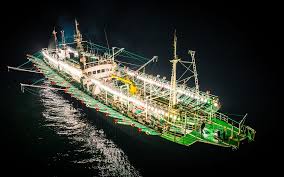
Visual Characteristics: "City of Light"
The most striking feature of this vessel is its appearance when operating at night. The ship is equipped with hundreds of high-powered hanging lights (up to thousands of watts per light) along the hull.
The brightness is so strong that it resembles a small floating city, and so bright that this fleet can be clearly seen through satellite imagery from outer space.
Technology Mechanism & Operation
The squid jigger does not use large trawl nets. Instead, this vessel relies on a highly precise automatic fishing system:
1. Phototaxis Manipulation
Squid are attracted to light. The ship's spotlight lures schools of squid from depths of hundreds of meters to the surface around the hull.
2. Automated Jigging Reel
The automatic winch releases and retrieves a long fishing line with a constant vertical motion (up and down) to mimic the movement of natural prey.
3. Barbless Jigs
Using colorful plastic bait surrounded by sharp needles without barbs. The squid's tentacles get caught without severe injury, allowing for easy automatic release.
4. On-board Freezing
Catch is immediately cleaned, sorted, and frozen at extreme temperatures -30°C to -40°C to maintain the best export quality.
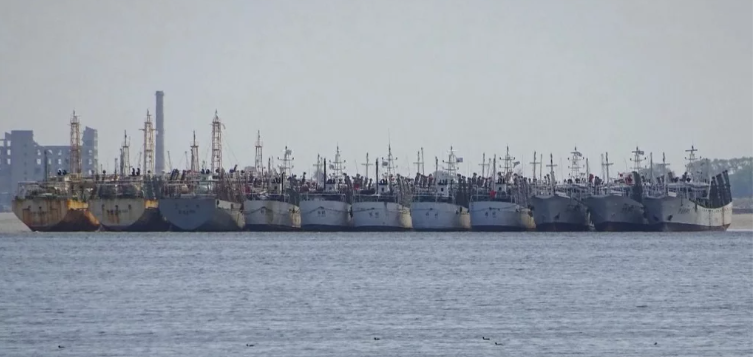
Open Sea Operations
High-value commercial squid such as Illex argentinus live in cold ocean areas. This vessel has a large hull (hundreds to thousands of tons) to withstand large waves in the Southwest Atlantic or Southeast Pacific.
Also Read: Types of Vessels